
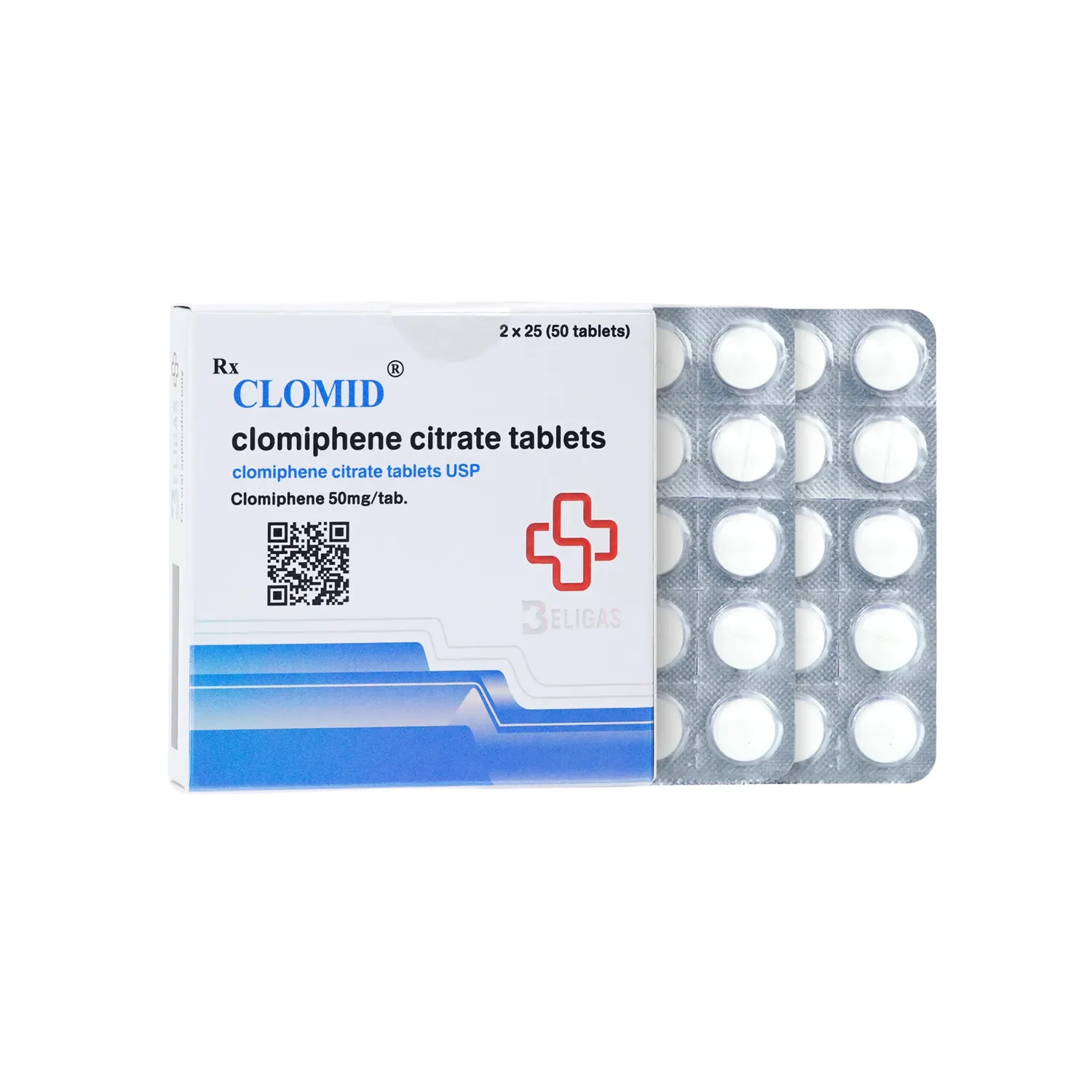
Description
Clomid 50 mg
Clomid, also known as clomiphene citrate, is a selective estrogen receptor modulator (SERM). It is commonly used in medical treatment for fertility-related conditions and is also known in performance-enhancement contexts for supporting hormonal recovery after anabolic steroid use.
How it works
Clomid works by blocking estrogen receptors in the hypothalamus. This stimulates the release of gonadotropins, which increases luteinizing hormone (LH) and follicle-stimulating hormone (FSH) production. As a result, the body may increase its natural testosterone production.
In women, Clomid is commonly used to stimulate ovulation by encouraging the release of hormones necessary for egg development and ovulation.
Proper use and dosage
Clomid has an estimated half-life of approximately 5–7 days.
Typical dosages range from 50–100 mg per day, depending on the intended use, individual response, and medical guidance. Higher dosages may increase the likelihood of side effects, so moderate dosing is generally preferred.
Benefits
Clomid is commonly used to help restore natural testosterone production following hormonal suppression. It may also help manage estrogen-related effects associated with certain anabolic compounds. In women, it is widely used as a fertility medication to promote ovulation.
Side effects
Possible side effects include headaches, hot flashes, stomach discomfort, mood changes, and sensitivity to light or vision disturbances. Less commonly, users may experience elevated blood pressure, liver-related issues, or depressive symptoms. Side effects often improve with dosage adjustment or discontinuation under medical supervision.
Reviews
There are no reviews yet.